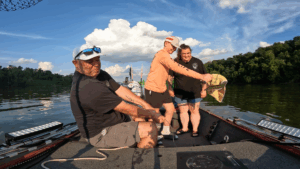
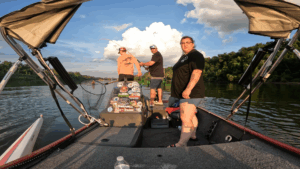
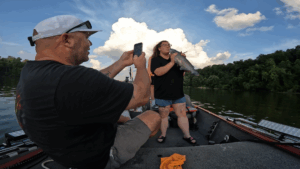
Thought this was going to be a chill night of catfishing. Nope. The Piscifun Lumicat E rods clocked in with those Triple City Angler Takedown Rigs and turned it into a full on fish factory.
First fish hit before I even finished setting up, and it never really slowed down. Doubles, almost triples, rods bending everywhere, me trying to net one fish while another one is surfing across the surface like it paid for a wakeboard lesson.
The little guys showed up covered in mud and wrapped in line, still somehow not even hooked half the time. The bigger ones made sure I got my workout in, including a sweet mid to upper 20s that tried to rip the rod out of the holder and take off with the boat.
Twenty fish by midnight, a brand new carpet full of catfish slime, Lumicat E rods doing work, and me talking to the chat like they were supposed to warn me every time a rod went down.
If you like night catfishing, Piscifun gear (Use code: FKC18), Triple City Angler Rigs (Use code: FKC10), and honest reactions when a big fish hits, this one is for you. Drop a comment, tell me your biggest cat of the year.
Nonstop night bite. I landed 11 catfish with two quick double ups and a 20 lb kicker, all on grape chicken and eel. I set up in a new spot, dropped fresh rigs, and started alternating baits, eel then chicken. Rods bent almost right away. Four fish came in the first 10 minutes, then a flurry of hits kept me busy all night.
I show the simple bait that worked, chicken gizzards soaked in grape Kool-Aid. Tough on the hook, perfect for steady bites. I also ran American eel, including a head piece that produced. I walk through my basic catfish rig, 8/0 hook, 5 in rattle, 8 oz weight, and how I place the hook through the tendon on gizzards so it stays put.
Highlights include two fast doubles, a strong run in shallow water on grape chicken, and the biggest of the night at 20 lb right at the 4 hour mark. I share what I saw on sonar, how I rotated lines, and why I keep baits wet to stay on fish.
Drop a comment if you fish grape chicken or eel. Hit subscribe for more night sessions and live edits tomorrow.
We finally had a window to chase blues on the Potomac, put our boat lighting to the test, and rack up a pile of fish. Water sat at a toasty 87°, storms grumbled to the north in Maryland, and we set up over a 60 to 70 foot hole with one goal, get bites while figuring out which lights help most after dark.
Heading Out on the Potomac River
Deeper, cooler water often stacks fish, so we started on a deep hole, dodged a curious duck, and got rigs in fast. Our starting setup included:
Rods loaded with 40 lb braid and mono
Fresh American eel
Assorted sinkers for heavy current
Three-way rigs tied and ready
Spotting the Incoming Storm
We watched the radar, listened to the thunder, and saw lightning flash to the north. It looked like the cells would stay off us, so we stayed alert and fished.
Preparing Fresh American Eel Bait
We went with lively American eel, cut into chunks. That TikTok-shop knife has chewed through bone for years, and it still got it done, even with a squirmy eel fighting back.
Select a lively eel
Cut head and body sections
Hook pieces through the front, then back for a secure hold
Shoutout to Triple City Anglers gear while we rigged up.
Tying Rigs with Minotaur Hooks
We rotated 10/0 Leviathan and Slime Series from Minotaur Hooks (code: COOP10). We tied a simple three-way rig: mainline to the top eye, short leader with a weight, and a longer leader to the hook with a few inches left for bait action.
First Casts and Early Action
The current ripped, debris pushed down our side, and we picked through snags and log drifts. We also learned, again, that eel gunk and fingers do not mix. For shirts, hats, towels, and mugs, we keep FishingKnotCatching.com stocked.
Nibbles in the Deep Hole
We saw nibbles on multiple rods while tracking the radar. Some were sticks and rocks, some were fish, and a couple came unbuttoned right at the boat.
Testing Lighting Setups on the Boat
We moved black lights and red strips around the bimini to see what actually helps. Here is what we noticed:
Black lights: strong glow, great line visibility, attracts bugs
Red lights: clean look, bug-free, bright on the eyelets
Combo: best of both, but the bugs love the black lights
We unplugged black lights when the bug cloud grew, ran straight red for a while, then switched to a combo as bites picked up.
Encounters with Boats and Wildlife
Highlights:
A duck that wanted handouts
A cabin cruiser with twin Mercs that gave us space
A pontoon full of rods that boated past twice
Navigating River Trash and Snags
We fought the trash zone on one bank, then slid to the Maryland side to dodge seaweed, plastic bags, and branches.
Hooking into Catfish Action
The bite built fast once we moved spots near trees and later by the airport. We stacked numbers, had a few double-ups, and worked the net non-stop. Final tally:
Coop: 11 fish
Dad: 4 fish
Size range: about 3 to 10 pounds, mostly blues
Memorable Big Ones and Misses
We had an 8 to 10 pounder that hit like a truck, some self-releases, and plenty of slime and catfish poop. At one point we thought we had a flathead catfish in the net, but it turned out to be another blue.
Moving Spots for Better Bites
We hopscotched:
Deep hole to the Maryland side
Downriver to an old PB zone by the airport
Wind and current spun the boat, so we reset lines often.
Late-Night Doubles and Tangled Lines
We saw a double-up, got wrapped in the wind, and even joked about the banana on board. Superstition or not, the fish still chewed.
Calling It a Night on the Water
By 11:50, we were wiped and broadside in wind and current. One last dink made it 15 total, then we packed up with a plan for a fun challenge next time.
If you’ve fished with red or black lights at night, which do you prefer and why? Share your take in the comments, and if you want to try the exact setups, check out the Onforu Black Lights, Nilight red strips, and our hooks from Minotaur Hooks using code COOP10. Thanks for reading, and tight lines.
We chased flathead catfish at a brand-new, undisclosed river spot, and we went all in. New water, new target, and a long drive matched to our runs to Lake Hannah. We packed eel, planned to catch bluegill, and hoped to answer the big question: how would targeting something new turn out?
The Spark: Post-Tournament Motivation and Goals
We started the day reading tournament results, and the numbers set the tone. First place had 11 pounds, the biggest fish was 5.7 pounds. Oh boy. We knew it could be tough from the bank, yet still solid for us. Coop’s biggest is 10 pounds on July 12, so we set a simple goal, beat that.
Quick facts:
Bank results: 5 pounds, biggest fish 5.7 pounds
Drive time: about 1 hour 40 minutes, same as Lake Hannah, opposite direction
Why Flatheads, Why Now
We wanted something new, not blues from the Potomac. We picked a spot known for flatheads, with local talk of 30 to 35 pounders and tournaments every couple of weeks.
Motivation:
Fish a flathead-only river section
Make a different kind of video
Test skills beyond Potomac blue cats
The Run In: Gear, Bait, and First Look
We rolled up saying, Look at that tree. Laydowns everywhere, timber-lined banks, and glassy water. The river read about 20 feet across much of it, with some deeper holes. Between dams, the current slid one way all evening.
We found 10 to 12 bluegill, the perfect flathead bait. We chopped some into head and tail pieces, then saved others to fish live after sunset. LiveScope showed marks about 35 feet back, so we set up to fish tight to the wood with 8 oz lead on some rods.
Lines hit the water at 7:45 pm. Six baits, eel and cut gill, 20 yards off shore. It was blazing hot, frogs sang, and boats slid by. We gave spots 20 to 30 minutes. If quiet, we moved. We’re not real strong with flathead technique, so we watched, learned, and adjusted.
Shade Bank Move: Trees, Snags, and Laughs
By 8:00 pm we shifted to a shaded bank loaded with fresh laydowns, just 10 feet off the edge. Casting tight to timber brought taps and stick bites. At one point, Coop basically lassoed a whole tree. Coup’s favorite thing to do is scare the fish.
Bugs and Lights
Mosquitoes lit us up. We hit bug spray and ran red lights, then tried black lights, which called in even more bugs. If you night fish, those Onforu black lights are bright, but the SKs still win. Our Nilight red-green bow strip helped without drawing every bug in the county.
Sunset Switch: Live Bait and Real Bites
By 8:15 to 8:30 pm we switched to live bluegills, tail-hooked with 8 ounce sinkers. Line 3 got chased hard. We waited for a run, but one bluegill tangled itself to pieces and another rod got light nibbles on eel. Flathead bites feel different, and we felt it.
How we hooked live bait:
Tail fin hook point
Wait for the rundown before loading up
Dragging Try: Middle River Mayhem
We dragged cut bait, eel, and live with the current. No trolling motor needed. Then came tangles, a lost planer board, and a snag that felt like a fish. Lost everything. Peachy.
Last Push and Final Word
At 11:00 pm we anchored one last time and ran what we had left, eight live bluegills and a piece of eel. The trolling motor acted up, bugs kept chewing, and lines bounced with false alarms. We can’t leave skunked, we said. But we did. We caught piles of bluegill, zero flathead catfish.
Lessons learned:
Hook live bait inside the boat
Bug spray is not optional
Red lighting beats white when skeeters are thick
We wrapped at 11:45 pm with a 1 hour 40 minute drive home. We still had a blast and we’re coming back for redemption. Catch more behind-the-scenes on Facebook and support the partners who support us, like Triple City Anglers with code FKC10 and No Fly Zone Fishing with code FKC20.
We’ll be back on those flathead catfish soon. Got a can’t-miss tip for live bluegill or eel on flatheads? Drop it our way and we’ll put it to work next trip.
Last night got off to a CRAZY start with 5 fish in the first 15 minutes of the stream. Then it slowed down a bit, then I ate a Carolina Reaper jelly bean and then the bite picked back up. Check out the stream here and dont forget to give us a follow. https://www.twitch.tv/videos/2587591770
I get a lot of questions about our boat and how we rig it for night catfishing, striper runs, and crappie trips. Here’s the full walk-through of our 2023 Bass Tracker Classic XL, what we upgraded, why it works for us, and what I’d change next.
Boat overview
Our ride is a simple, dependable rig for busy rivers like the Potomac. It’s 17.5 feet with a 50 hp Mercury and no fluff, just what we need to fish hard at night.
Affordable, easy to maintain
Handles catfish, stripers, and crappie
Used often, not a garage queen
Cost and value
We bought it brand new for about $16,000 out the door. We’ve added smart upgrades that kept it an affordable entry into serious catfishing.
Reliable for daily use
Parts are simple and easy to service
Front deck lighting upgrades
Navigation lights
The stock nav light was weak. We switched to bright Nilight LED strips so boats can see us from way off, which matters on a crowded river at night.
I repurposed an old baseball tee. Home plate became the base, and the upright holds our GoPro, phone mount, and switches for the bow LEDs and our streaming light. It’s DIY ingenuity that’s stable and easy to reach.
GoPro mount
Phone holder
Light switches for bow and filming
Trolling motor and spot lock
We upgraded from the stock Minn Kota Edge to a Minn Kota PowerDrive that a buddy, Haz, passed along. I added spot lock, and it changed everything.
Holds us on a spot without dropping anchor
Huge for crappie, catfish, and bait fishing
Fewer lost anchors, better boat control
Bimini, rod holders, and rear lights
We installed a bimini and added black lights plus bright red lights for night vision and fewer bugs. Our Smackdown rod holders keep the spread clean and strong. The rear night lights help with netting and photos. They fold down for trailering to protect Tracker welds.
Under the rear deck, we run an Everstart 750 inverter for the black lights and charging. Power comes from two 12.8V 100Ah lithium batteries wired for 12.8V with 200Ah total. They run all our lights, the trolling motor, and the Lowrance units. The outboard stays on the cranking battery, which solves cold weather drain issues.
Electronics and sonar
On the dash, I run a Lowrance Hook Reveal 9 for our spots and mapping. Up front, we mount a Lowrance Eagle 9 with live sonar when we’re targeting striper or crappie. The mount is a bike repair stand that drops in and tightens fast.
We fish TFR rods. I run PCFUN Viper X 5000 reels. Coop runs PCFUN Alijos 400 size. We typically spool 30 lb mono to an 80 lb leader with a three-way swivel. We’ll use Triple City Anglers rigs or tie our own when needed.
Hooks: Minotaur Hooks Slime series, code COOP10 at Minotaur Hooks
Weights: coin weights from Avis (6 to 8 oz), plus JBN dragon weights
Storage under the deck holds a cooler, spare clothes, alpha boards, dragon weights, a Ryobi battery for phones, and an axe for emergencies. Up front, I built a small battery box to keep the GoPro and phone charged while streaming.
The rear deck measures about 72 inches inside the gunnels, which makes two adults and a pile of gear a tight fit. It’s hectic but fun, and now you know why the streams get wild.
Upgrades I want next
Build a custom aluminum livewell under the rear seats or replace the whole rear deck with a larger, tucked livewell
Use the space as dry storage when not fishing, tucked away for dry use when not fishing
Hours, wins, and notes
We’ve had the boat since August 2023 and logged about 300 hours. I do all the oil and gear changes myself. In the LFTL series, we won twice, took third once, and went into the championship in second. Great season despite setbacks.
Wrap up
This setup didn’t break the bank, but it lets us fish hard, stay safe at night, and stream clean video. If you want links to lights, mounts, and gear we use, they’re above. Got questions or ideas for the livewell build? Drop them, and I’ll work them into the next update. Tight lines.
I set out with Coop to try something different. We launched with nothing but worms and a plan. Catch our own bait, grab dinner on light tackle, then run upriver and try bumping for flatheads for the first time. Light wind, about 5 mph, set the tone for a full day of fishing and a lot of learning on the fly.
The Fishing Mission Begins
We called it a Smores board efficient today. The plan was simple:
Catch about 10 bluegills for bait
Target stripers for dinner
Learn to bump for flatheads, a new technique for us
Why Start with Nothing?
I wanted a challenge. No live bait beyond worms, just hooks and time to figure it out. It was all about learning because we came down with no bait. We even joked about leaving the LiveScope at home to keep it raw.
Heading to the Cove for Bait
We slid to the back of the marina, a mix of docks, shade, rocks, and shallow cover. I rigged worms under a float and pitched tight to trees in 5 to 9 feet. Early bloopers included forgetting spot lock, hitting a tree with the bobber, and fixing a lost bobber plug with electrical tape.
First Catches: Bluegills and Perch
A “nice little bluegill” hit first, then a big yellow perch for the bait tank. I adjusted the bobber to about 2 feet and started lipping fish. Oh, I got him turned into a theme. Bluegill and perch set us up for later.
Switching Gears to Striper Fishing
With bait in the tank, we slid out for stripers. We threw a rattle trap and a white fluke and found fish fast. The regulation window was 19 to 24 inches, two fish total. We popped a string of 18-inchers, then finally stuck a 19 and a 22. Doubles happened more than once. These fish were flat out aggressive.
Dinner on the Line: Measuring and Releasing
We measured carefully, squeezed tails, and logged fish:
Short at 18, release
Short at 18, release
Keeper at 19
Keeper at 22
I told Coop, If you catch one that’s 19, then I get to use your rod. He said sure, then handed me a net full of tangled treble hooks instead.
A Surprise Walleye Joins the Haul
Somewhere in the mix, a fish with a thin head and big eyes showed up. We looked it up and felt good about calling it a walleye. That brought our species count up, right alongside bluegill, perch, channels, and stripers.
Upriver Adventure: Prepping for Flatheads
With two keeper stripers in the box, we ran upriver to bump for flatheads. No cutting board, so we cut bait on a busted tackle box lid and split pieces by inches. We used 4 oz dragging weights on our usual rigs, the JBN magic stick style, and eased into 45 feet.
Learning Bumping on the Fly
The process was simple in theory. Drop to bottom, pick up, let it go, and match current with the trolling motor around 0.5 mph. We fumbled with direction and speed and laughed through sore arms. Dude, I’m so excited. I want my first flathead.
River Surprises: Line and Rocks
We hooked into a mess of heavy line tied to a jug float and hand-lined a couple hundred yards off the river. Nothing on the end, but at least we pulled it out. Rocks made hits feel fishy, yet baits stayed on and we kept moving.
First Bumping Success: Blue Catfish
Then the rod loaded. It felt different. Not a flathead, a solid blue cat in the 8 to 10 range. Net, photo, quick release. Species tally grew.
More Bumps Lead to Channels
Coop followed with a channel around 7 pounds in 22 feet. We both agreed, bumping is pretty relaxing once you get the rhythm.
The Big One That Wasn’t
A huge takedown near the end had us fired up. Bugs were everywhere, lines were singing, and we were talking about leaving. Net ready, we landed another good channel, somewhere in the 12 to 15 range. The leaving fish strikes again.
Lessons from the Potomac
We wrapped early due to lightning and bugs. Final tally, 16 to 17 fish and 7 species. No flathead yet, but it stays on the list. Key takeaways:
Improvise gear when you forget stuff
Patience pays off, especially when learning new methods
Tonight’s fishing trip on the Potomac was something special. Libby, my wife’s best friend, joined us for the first time ever on our boat and for bluecat fishing. With my wife and daughter out of town for a softball tournament in Colorado, we decided to give Libby a proper introduction to the sport. Spoiler alert: it was a night to remember.
Libby is a fun and fearless 25-year-old, half my wife’s age (she’s 50). Even though she’s been fishing before, this was her first time on our boat and fishing bluecats with us. We had high hopes for her first trip and knew she’d keep things lively. Here are some quick facts about Libby:
Never cut up an eel before
Never fished bluecats on this boat
A self-proclaimed wild child
Brings plenty of humor to the trip
Our plan was simple: keep Libby busy catching fish on the muscle bed, a known hotspot for bluecats. The weather and water conditions were tricky after a big storm hit the day before. The current was running at 11,000 cubic feet per second—massively higher than the usual 3,000. Because of this, we decided to stick around the muscle bed to take advantage of the active bite. If the night went on, we planned to head to Woodrow area where the current would be going out. Overall, staying downriver promised more action and less hassle.
Just 12 seconds after dropping the bait, Libby caught her personal best (PB) bluecatfish. It was a rush for everyone onboard. At first, she struggled with reeling technique but quickly got the hang of it with some coaching. She learned to keep the rod tip up and reel steadily, key steps for landing bluecats.
As the night went on, we had multiple double and even a triple catch. Managing three rods and fighting multiple fish at once was intense. Hooks got tangled, lines crossed, and everyone stayed on their toes. This kind of chaos is part of what makes catfishing with friends so memorable.
The night wasn’t without surprises. A fast-moving crew boat piloted by an enthusiastic “coach” passed very close, nearly causing trouble. The wake nearly knocked Libby off the boat at one point, a moment we luckily captured on camera. These unexpected events added a dose of unpredictability and laughter.
Libby wasn’t just lucky with her first catch — she ended up landing two massive bluecats weighing 19 pounds each, both personal bests. Catching fish of that size means a good fight and a lot of excitement.
By 1:15 a.m., Libby was tired but happy, and we dropped her off after an unforgettable night. We caught roughly 30 fish, shared laughs, and made lasting memories. For anyone curious about bluecat fishing, this trip shows how much fun it can be, especially with good company.
Last night on the water was EPIC. It was one of the most fun times Coop and I have had on the water in a long time.
You name it and it probably happened last night. Everything from bringing a guest out on the boat (need a bigger boat to do that again), to getting hit by a crew team “coach”, to guest catching her PB, to the microphone shutting off for the entire night, to eating tacos, hotdogs and Moz Sticks at 115am, to getting pooped on for the first time, to doubling and tripling up.
This is what fishing is about making memories with good friends and making fishing fun again.
Stay tuned for the entire video even though audio is going to be JACKED.
Well first of all, we have this new website. Where you can keep up with everything we are doing. We will be posting normal blogs like this when we can’t get out to fish and we will be posting vlogs when we do get out and fish.
But this is just another way for us to stay in touch with all of you.
From here you can hit up our SHOP and show your support to keep us doing what we do, making videos fishing and having fun.
I am thinking of adding a calendar so I can put on our trips so everyone will know, but I have to figure out a way to keep it updated or else it is a waste.
You can get to all our social media channels by clicking those little icons there at the top of the page and be sure to subscribe/follow us on all of them.